Investing has changed a lot since 1971. Back then, the dollar was tied to gold. Today it isn’t, and that single change reshaped everything.
One way to track that change is debt-to-GDP. Debt-to-GDP is the total government debt measured against the size of the economy. I use it to split the last 50 years into three distinct eras.
Era 1: The post-gold standard era (1971–2012)
This era started in 1971, when President Nixon cut the dollar loose from gold. Before that, a fixed number of dollars bought an ounce of gold.
After 1971, the dollar floated freely. Gold didn’t back it anymore. That decision created the system that we still live in today.
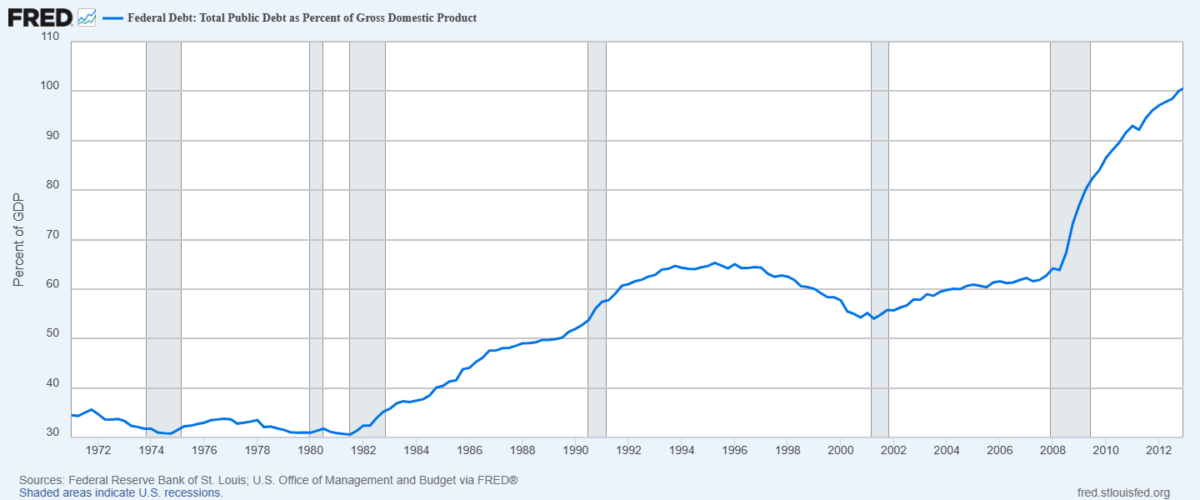
Debt-to-GDP stayed manageable through most of this era. That gave the Federal Reserve real room to act when inflation got out of control.
What it meant for the Federal Reserve
In the early 1980s, the Fed hiked rates to nearly 20%. Chairman Paul Volcker did it to crush inflation.
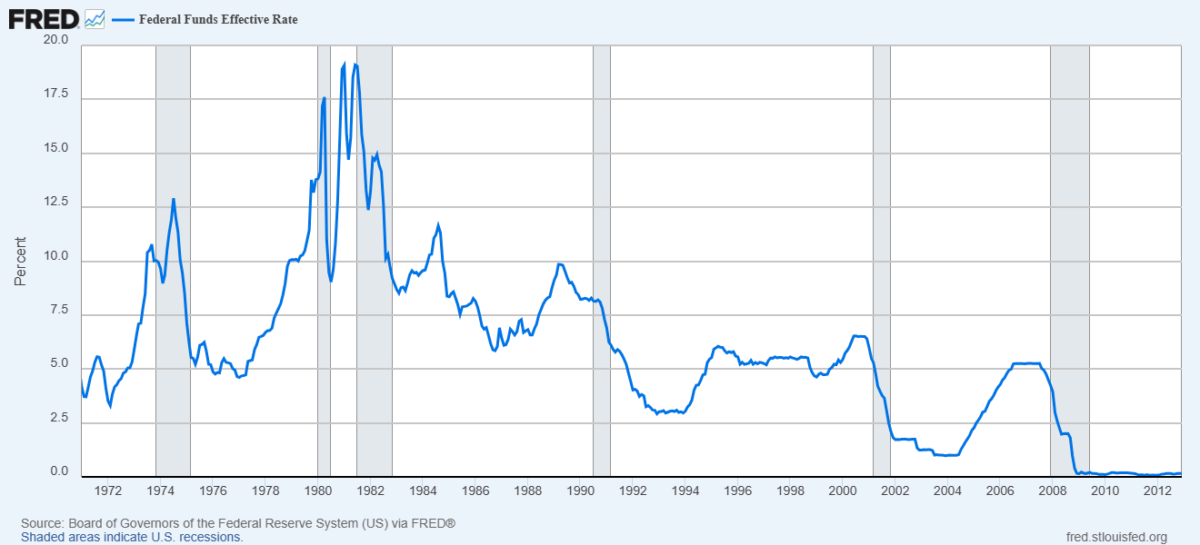
The government could absorb that shock. Its debt-to-GDP was still manageable. Higher interest rates didn’t threaten the United States’ ability to pay its debts.
Stocks and bonds moved in opposite directions back then. Cut rates, and both stimulated growth. Raise them, and both cooled off together. That relationship barely holds today.
To see how US equity styles performed during this era, check out my detailed analysis.
What it meant for investors
I call this the idealized era of investing. Fundamentals worked the way textbooks said they should (the textbooks were written in this era).
This is Warren Buffett’s era. The goal was to find relatively cheap stocks and invest in them. Investors leaned on a few core metrics:
- P/E ratio (price relative to earnings)
- P/B ratio (price relative to assets)
- Price-to-sales ratio
The pension shift
This era also started a bigger shift: pensions to 401(k)s.
For most of American history, retirement was the company’s job. Companies offered defined benefits to their employees. This was a post-retirement payout that was determined by salary and years of service.
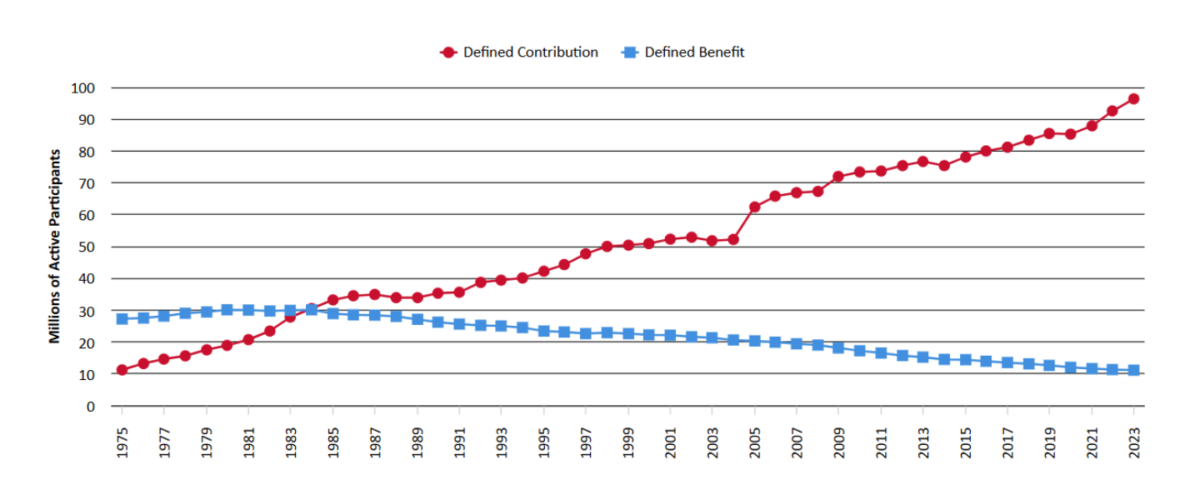
Starting in the 1980s that job moved to individuals. This is called a defined contribution. Workers were responsible for their retirement now.
Era 2: The suppressed rates era (2012–2020)
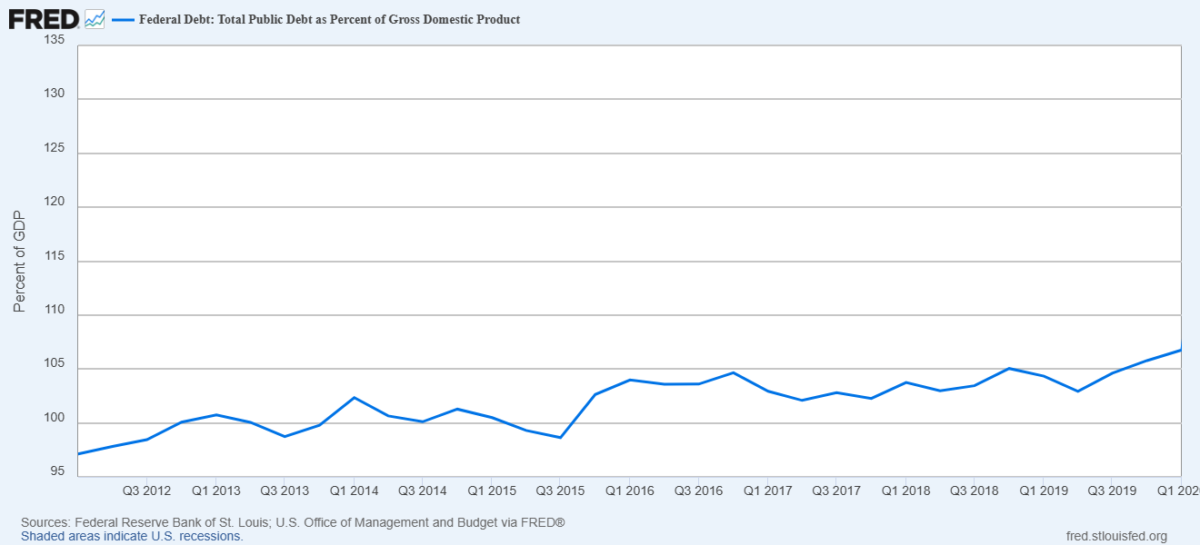
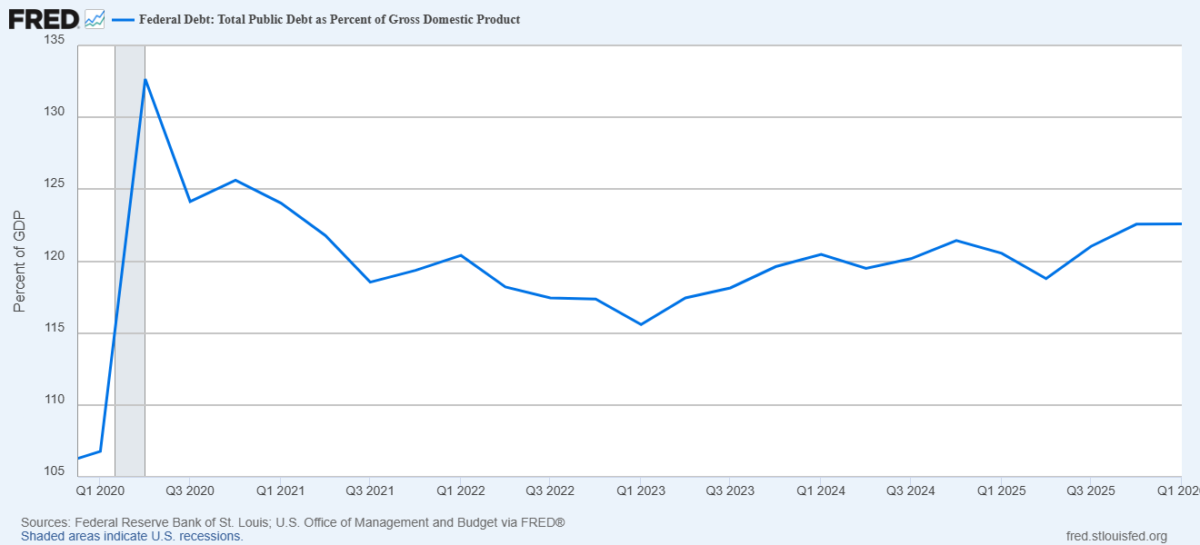
Era 2 began when US debt-to-GDP crossed 100%. Total debt now equaled the entire economy’s output.
How we got there
The Global Financial Crisis pushed debt-to-GDP past that mark.
Millions of Americans lost their jobs, which meant less tax revenue for the US government. Tax revenue is how the government earns money.
Interest rates were cut to near zero to encourage cheap borrowing.
The government and the Fed injected trillions to stop the financial system from collapsing.
This spiked debt-to-GDP because the government was spending more than it was taking in from taxes.
Why zero rates didn’t work as advertised
Theoretically, zero rates are supposed to spark borrowing and growth. That’s not quite what happened.
Near zero interest rates also affected the stock market.
Technology and growth companies outperformed value during this era. Why invest in “cheap” companies when interest rates were near zero?
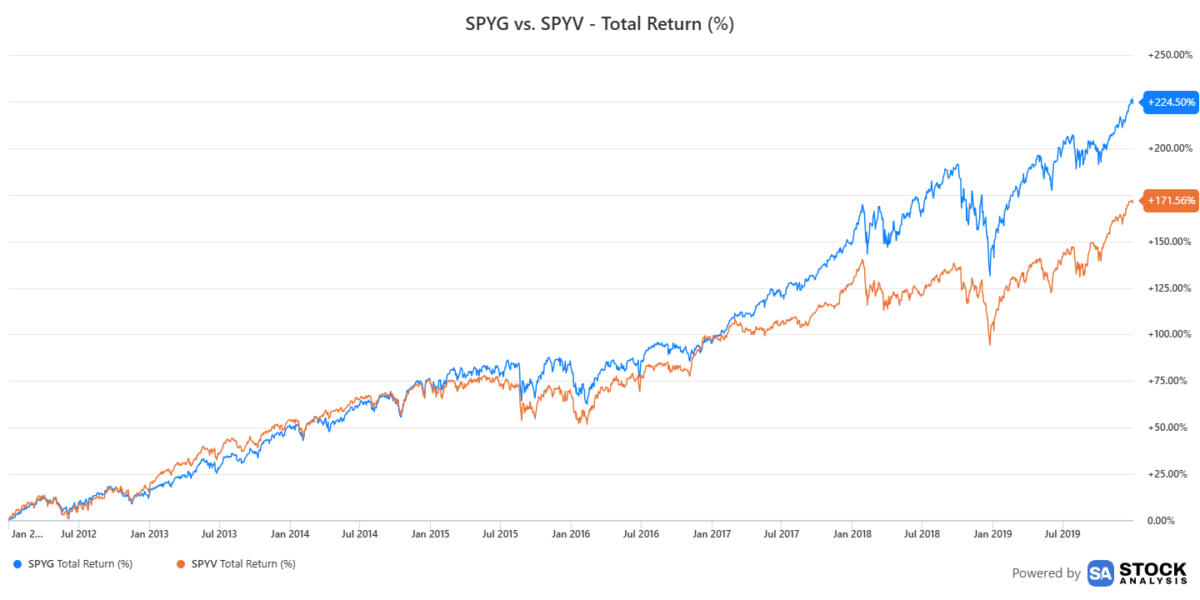
My detailed analysis of how US equity styles performed during this era.
The rise of passive investing
Passive investing went mainstream in this era. Vanguard led the charge with low-cost index funds.
Old mutual fund managers charged high fees for active picks. Low cost index fund ETFs had lower expense ratios and often outperformed the active funds.
This shift changed market mechanics itself. Most 401(k) money now flows straight into the S&P 500 each month (or a total market index).
That creates a feedback loop. More people invest in the S&P 500 each month, prices are pushed up, more people invest to ride it.
How it ended
COVID ended Era 2 in 2020. Lockdowns triggered mass layoffs and a deflationary (prices decreasing) scare.
Congress passed the CARES Act. PPP loans and stimulus checks followed, and the Fed cut rates to zero again.
Era 3: The fiscal dominance era (2020–Present)
Era 3 began during the Covid-19 pandemic. Debt-to-GDP shot past 120%, a level the country had never seen.
Why fiscal dominance is the defining feature
Here’s a question to ask yourself. If inflation spiked into double digits today, could the Fed actually fight it?
Probably not. Higher rates mean higher interest payments on the debt. Higher interest payments on the debt means more borrowing. More borrowing increases the debt load. It’s a vicious cycle.
Economists call this fiscal dominance. The debt load limits what the Fed can actually do.
However, you will never hear any government or Federal Reserve official say they are going to do fiscal dominance. It would undermine all credibility in US markets.
The 2022–2023 inflation scare tested this idea directly. The Fed hiked rates to roughly 5.5%, and inflation cooled for a while.
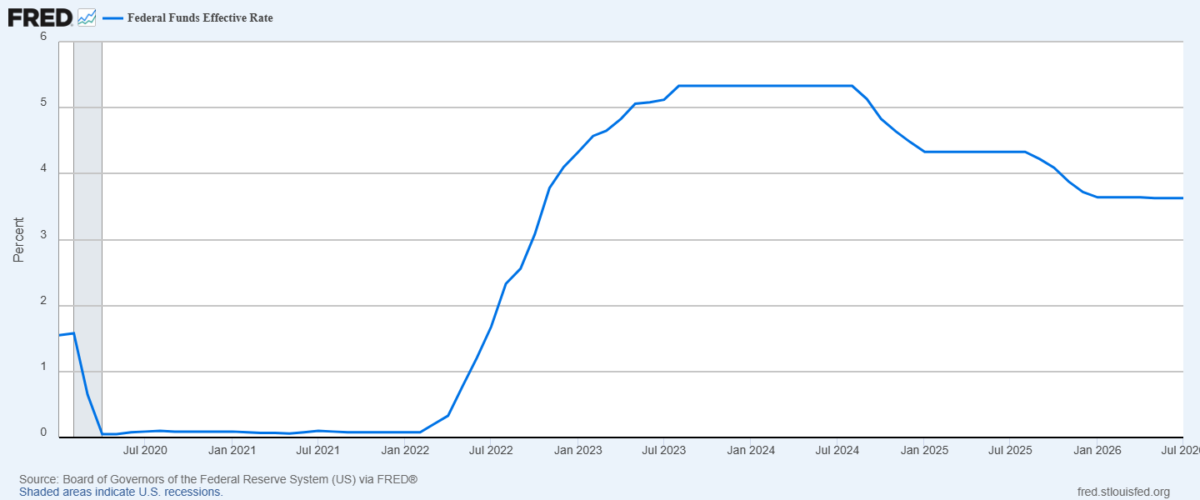
However, inflation never fully went away. If we see inflation continue to rise, the Fed might be limited in what they can do because of the fiscal situation.
What this means for how people invest
Era 1’s value playbook has mostly broken down. S&P 500 P/E ratios sit well above historical averages.
Many big investors expect a bailout or the Fed to print trillions if something breaks. If the safety net is assumed, why bother being selective? Why not just keep taking risks?
Signs of strain in everyday life
Fiscal dominance isn’t just about bonds and debt. People sense something is off with everyday costs.
Years of inflation (and dollar devaluation) has made it harder for people to keep up with the increase in the cost of living. Life is more difficult for people starting their adult lives in this era than in era 1.
Look at the rise of prediction markets and 0DTE options trading. People are betting on next week’s weather just to get ahead. Not to mention all the gambling and sports betting ads that are shown during sports.
That’s not extra cash looking for fun. It’s a sign people feel like they need to risk their money to get ahead.
A more connected, more fragile system
Era 3 looks different structurally, too. The global economy is far more interconnected than it was in 1971.
A single factory fire or shipping blockage can now ripple everywhere. We saw this happen during the Covid-19 supply shocks.
There’s also newer risks like AI and climate disruption that will have unknown consequences in the future.
Where things stand today
De-dollarization is also part of this story. Central banks (including China) keep adding to their gold reserves.
More countries are looking to complete transactions outside of the dollar system.
The US dollar, debt, and the Federal Reserve all look different than they did in 1971. Once you understand the era you’re in, everything else about your money starts to make more sense.