These companies position themselves inside the flow of money. Each time money is exchanged, grows, or managed, they take a cut for themselves.
I researched ETFs that would best represent each sub-category of liquidity monetization, but I ran into some problems.
There weren’t very many ETFs that did a good enough job fitting where I wanted them to. I decided to include a few individual stocks as well.
The ETFs and stocks I list below aren’t investment recommendations. This article is just my way of creating structure and trying to explain how my brain organizes things.
1. Pure Volume Risk ETFs and Stocks
These ETFs and stocks give exposure to companies that are involved in the exchange of money.
IPAY (Amplify Digital Payments ETF)
- AUM: $337M
- Index Tracked: Nasdaq CTA Global Digital Payments Gross Total Return
- Expense Ratio: 0.75%
- Top 10 Holdings (by weight): 53%
- Official Site: https://amplifyetfs.com/ipay/
IPAY is a perfect example of an ETF that doesn’t fit into my pure volume risk category. Here’s a few reasons why it’s not the best.
- Low assets under management
- High expense ratio
- Low daily volume
- Around 75% exposure to transaction and payment processing services
- Not truly market cap weighted
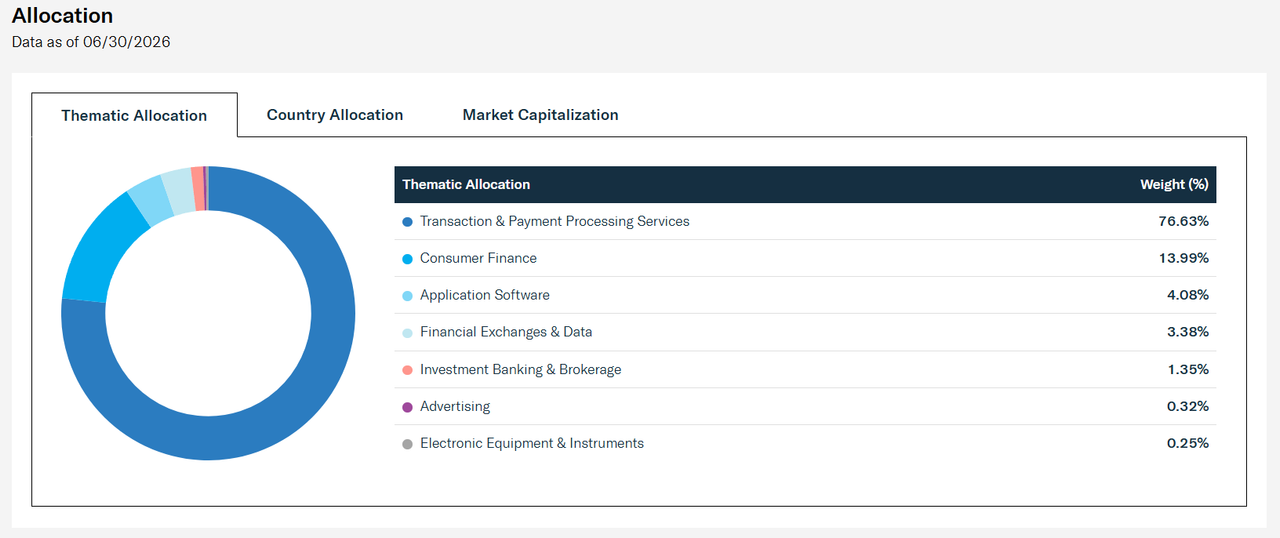
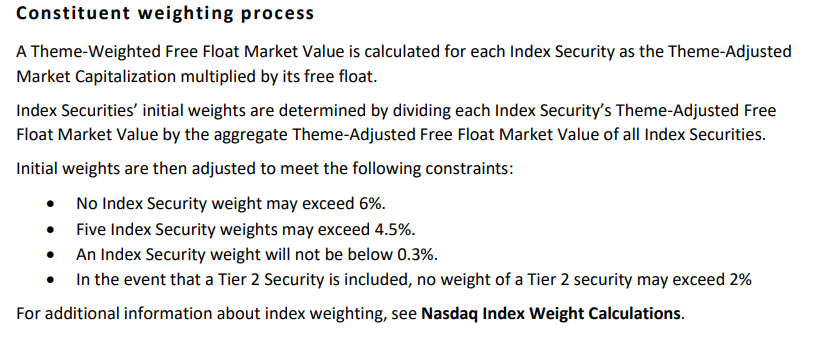
IPAY was the closest ETF I could find, and because I don’t really like it, I decided to include some individual stocks that represent this subcategory better.
Visa (V) and Mastercard (MA)
These stocks are focused on making money from payment volume. The more consumers and businesses spend, the more money these companies make.
CME Group (CME) and Cboe Global Markets (CBOE)
CME owns the marketplace where people trade futures and options. CME doesn’t care if prices go up or down, they get paid for the transactions.
CBOE dominates the options market. It’s similar to CME. As long as people are buying and selling options, then they get paid.
Coinbase (COIN)
Coinbase owns a chunk of the crypto trading marketplace. They collect fees based on people buying and selling crypto.
Robinhood (HOOD)
Robinhood is a big player in retail trading. They collect fees when their users buy and sell assets.
2. Asset Price Risk Stocks and ETFs
These companies manage other people’s money and charge a percentage of it. When asset prices rise, their profits rise as well.
There’s no “Asset Manager ETF” available on the market, so I looked for an ETF that best fit.
KCE (State Street SPDR S&P Capital Markets ETF)
- AUM: $446M
- Index Tracked: S&P Capital Markets Select Industry Index
- Expense Ratio: 0.35%
- Top 10 Holdings (by weight): 18%
- Official Site: https://www.ssga.com/us/en/institutional/etfs/state-street-spdr-sp-capital-markets-etf-kce
KCE was the closest ETF that fit the asset price risk subcategory. However, it has the same problems that IPAY does.
- Low AUM
- 47% allocation to asset management
- Not market cap weighted
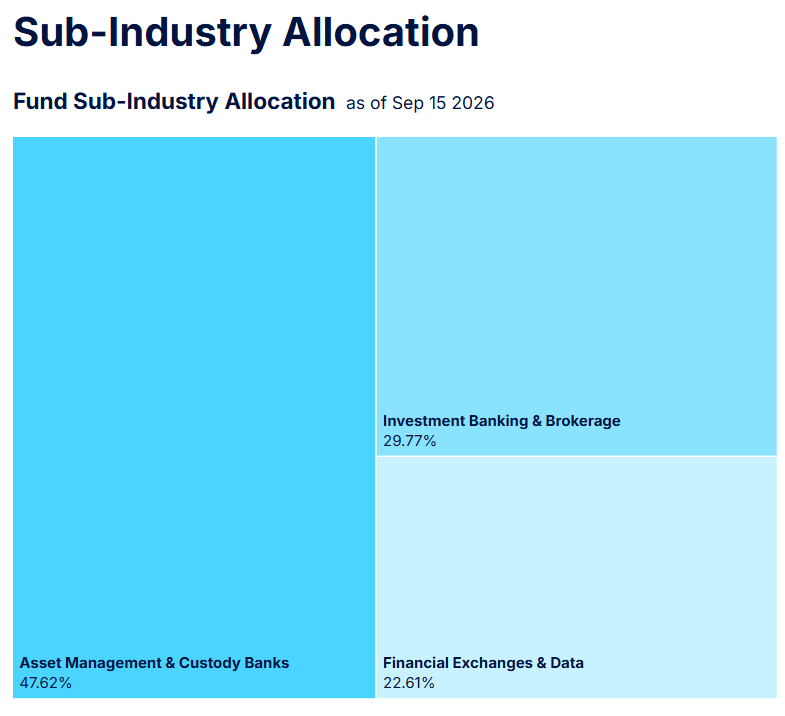
Here are some individual stocks that represent the asset managing industry better.
BlackRock (BLK)
BlackRock is a perfect stock that represents asset price risk. They don’t care what you invest in, as long as you invest with them. As their assets under management increases, so do the fees they collect.
State Street (STT)
State Street is another good example of asset price risk. They collect fees on all the ETFs that they offer.
3. Credit Risk ETFs and Stocks
These companies share the same benefits as the companies above, but they actually hold the loans. When borrowers can’t pay, these companies suffer.
I was able to find three ETFs that capture credit risk.
KBWB (Invesco KBW Bank ETF)
- AUM: $6.39B
- Index Tracked: KBW Nasdaq Bank Index
- Expense Ratio: 0.35%
- Top 10 Holdings (by weight): 59%
- Official Site: https://www.invesco.com/us/en/financial-products/etfs/invesco-kbw-bank-etf.html
KBWB is a broad bank ETF that is market cap weighted.
KRE (State Street SPDR S&P Regional Banking ETF)
- AUM: $3.81B
- Index Tracked: S&P Regional Banks Select Industry
- Expense Ratio: 0.35%
- Top 10 Holdings (by weight): 11%
- Official Site: https://www.invesco.com/us/en/financial-products/etfs/invesco-kbw-bank-etf.html
KRE gives exposure to small to medium sized regional banks. Their smaller size makes them riskier compared to the large banks in KBWB.
KRE is also an equal-weighted fund.
GPZ (VanEck Alternative Asset Manager ETF)
- AUM: $219M
- Index Tracked: MarketVector Alternative Asset Managers Index
- Expense Ratio: 0.40%
- Top 10 Holdings (by weight): 71%
- Official Site: https://www.invesco.com/us/en/financial-products/etfs/invesco-kbw-bank-etf.html
GPZ is unique because it offers exposure to companies involved in private credit.
GPZ is the riskiest ETF in this sub-category because private companies don’t have to play by the same rules as public companies do.
For example, Blackstone has a ton of different investments. However, regular investors don’t know the true market price of those investments. There’s no way to know what the true value of Blackstone’s investments are.